Cape Chidley
Headland at the northeastern tip of Labrador, named in 1587.

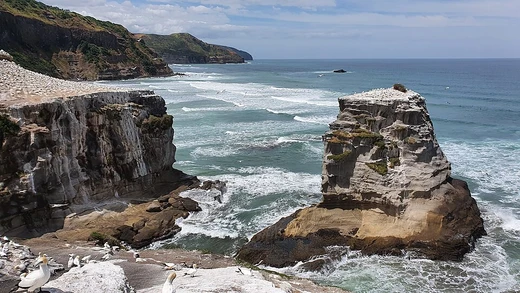
Cape Chidley is a headland located on Killiniq Island, Canada, at the northeastern tip of the Labrador Peninsula. The cape marks the south end of the entrance to the Hudson Strait and forms the northernmost point of Labrador. It is also the site where, in October 1943, a German U-boat crew installed an automated weather station, code-named Weather Station Kurt, on the northern tip of Labrador near Cape Chidley.
- Location
- Killiniq Island, Canada (boundary of Newfoundland and Labrador and Nunavut)
- Named after
- John Chidley
- Elevation
- 350 metres (1,150 ft)
Lore & Background
The Torngat Mountains terminate at Killiniq Island, and the top of the knoll forming the headland has an elevation of 350 metres, making it considerably higher than its two flanking headlands. In October 1943, a German U-boat crew installed an automated weather station on the northern tip of Labrador near Cape Chidley, code-named Weather Station Kurt. The installation of the equipment was the only-known armed German military operation on the North American mainland during the war. The station broadcast weather observations to the German navy for only a few days, but was not discovered until 1977 when a historian, working with the Canadian Coast Guard, identified its location and mounted an expedition to recover it. The station is now exhibited in the Canadian War Museum. Labrador also shares a small land border with the territory of Nunavut on Killiniq Island.
Reader's Guide
Cape Chidley holds significance as a geographic and historical landmark at the boundary between the province of Newfoundland and Labrador and the territory of Nunavut. It marks the northernmost point of Labrador and the south end of the entrance to the Hudson Strait. The cape's role in World War II is notable: in October 1943, a German U-boat crew installed an automated weather station on the northern tip of Labrador near Cape Chidley, code-named Weather Station Kurt. The station broadcast weather observations to the German navy for only a few days, but was not discovered until 1977 when a historian, working with the Canadian Coast Guard, identified its location and mounted an expedition to recover it. The station is now exhibited in the Canadian War Museum. Labrador also shares a small land border with the territory of Nunavut on Killiniq Island.
Did You Know?
- In October 1943, a German U-boat crew installed an automated weather station on the northern tip of Labrador near Cape Chidley, code-named Weather Station Kurt.
- The installation of Weather Station Kurt was the only-known armed German military operation on the North American mainland during World War II.
- Weather Station Kurt was not discovered until 1977 when a historian, working with the Canadian Coast Guard, identified its location and mounted an expedition to recover it.
- Labrador shares a small land border with the territory of Nunavut on Killiniq Island.
Frequently Asked Questions
What is Cape Chidley?
Cape Chidley is a headland situated on the eastern shore of Killiniq Island, at the northeastern tip of the Labrador Peninsula in Canada. It marks the southern end of the entrance to Hudson Strait and serves as the northernmost point of Labrador.
Who named Cape Chidley and why?
English explorer John Davis assigned the name on August 1, 1587, in honor of his friend and fellow explorer John Chidley.
Why is Cape Chidley geographically significant?
It sits at the boundary between Newfoundland and Labrador and Nunavut, and its position at the south end of the Hudson Strait entrance has made it a key navigational landmark for centuries.
What happened at Cape Chidley during World War II?
On October 22, 1943, the German submarine U-537 established the secret meteorological post known as Weather Station Kurt at the cape.
What is the elevation of Cape Chidley?
The headland rises to approximately 350 metres (1,150 ft) above sea level.
More in Coastal And Marine Features 1-24
Spotted an error? Know more?
This is a living reference — every entry is fact-audited, and reader corrections feed straight into our audit queue. Suggest an edit · See this site's audit record