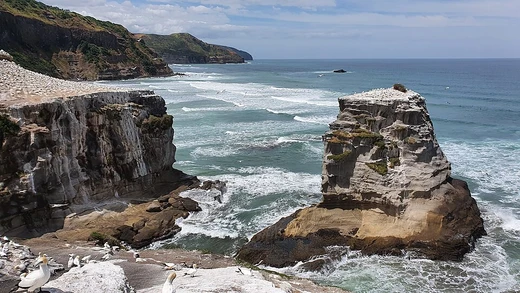
Cape Zhelaniya
A desolate Arctic headland marking the Barents and Kara Seas.

It is an important geographical landmark located at the northern end of Severny Island, the northern island of Novaya Zemlya.
- location
- Northern end of Severny Island, Novaya Zemlya, Arkhangelsk Oblast, Russian Feder
- named_by
- Dutch explorer William Barents in 1595
- original_name
- Den Hoeck der Begeerte (Cape Desire)
- protected_area
- Russian Arctic National Park
Lore & Background
The area in the vicinity of the cape is a desolate place, exposed to bitter Arctic winters. Later, during the Cold War, it became a secret experimental station while a multitude of nuclear tests, including 88 atmospheric ones, were conducted in Novaya Zemlya.
Reader's Guide
Cape Zhelaniya holds significance as a geographic point of reference that separates the northern ends of the Barents Sea and the Kara Sea. Its remote and harsh environment made it a strategic location for Soviet activities during World War II and the Cold War. Its legacy is tied to Arctic exploration, military history, and environmental monitoring.
Did You Know?
- Cape Zhelaniya was originally named Den Hoeck der Begeerte (Cape Desire) by Dutch explorer William Barents in 1595.
- The cape separates the northern ends of the Barents Sea and the Kara Sea.
- During World War II, a Soviet Arctic station at Cape Zhelaniya was shelled by the Kriegsmarine during Operation Wunderland.
- The cape was part of a Soviet nuclear testing zone where 88 atmospheric tests were conducted on Novaya Zemlya.
Frequently Asked Questions
What is Cape Zhelaniya?
Cape Zhelaniya is a desolate Arctic headland perched at the northernmost tip of Severny Island in Novaya Zemlya, within Arkhangelsk Oblast, Russia. Its Russian name translates roughly to "Cape of Desire," echoing the Dutch name given to it over four centuries ago.
Where exactly is Cape Zhelaniya located?
It sits at the very top of Severny Island, the larger northern island of Novaya Zemlya, in the High Arctic. Administratively it belongs to Arkhangelsk Oblast in the Russian Federation and falls within the boundaries of the Russian Arctic National Park.
Who named Cape Zhelaniya and what was its original name?
Dutch explorer William Barents christened the headland Den Hoeck der Begeerte, meaning "Cape Desire," during his 1595 voyage. The later Russian name Zhelaniya (from желание, "wish/desire") simply carries that original meaning into the local language.
Why is Cape Zhelaniya geographically significant?
The cape marks the precise point where the northern boundaries of the Barents Sea and the Kara Sea meet, making it a key cartographic and navigational reference in the High Arctic. It is one of the most northerly named headlands in the Russian Arctic.
What historical roles has Cape Zhelaniya played?
During World War II it housed a Soviet Arctic station, and in the Cold War era it was used as an experimental facility. A weather station continued operating there until 1994, after which the site reverted to its present-day desolation.
More in Coastal And Marine Features 1-24
Spotted an error? Know more?
This is a living reference — every entry is fact-audited, and reader corrections feed straight into our audit queue. Suggest an edit · See this site's audit record